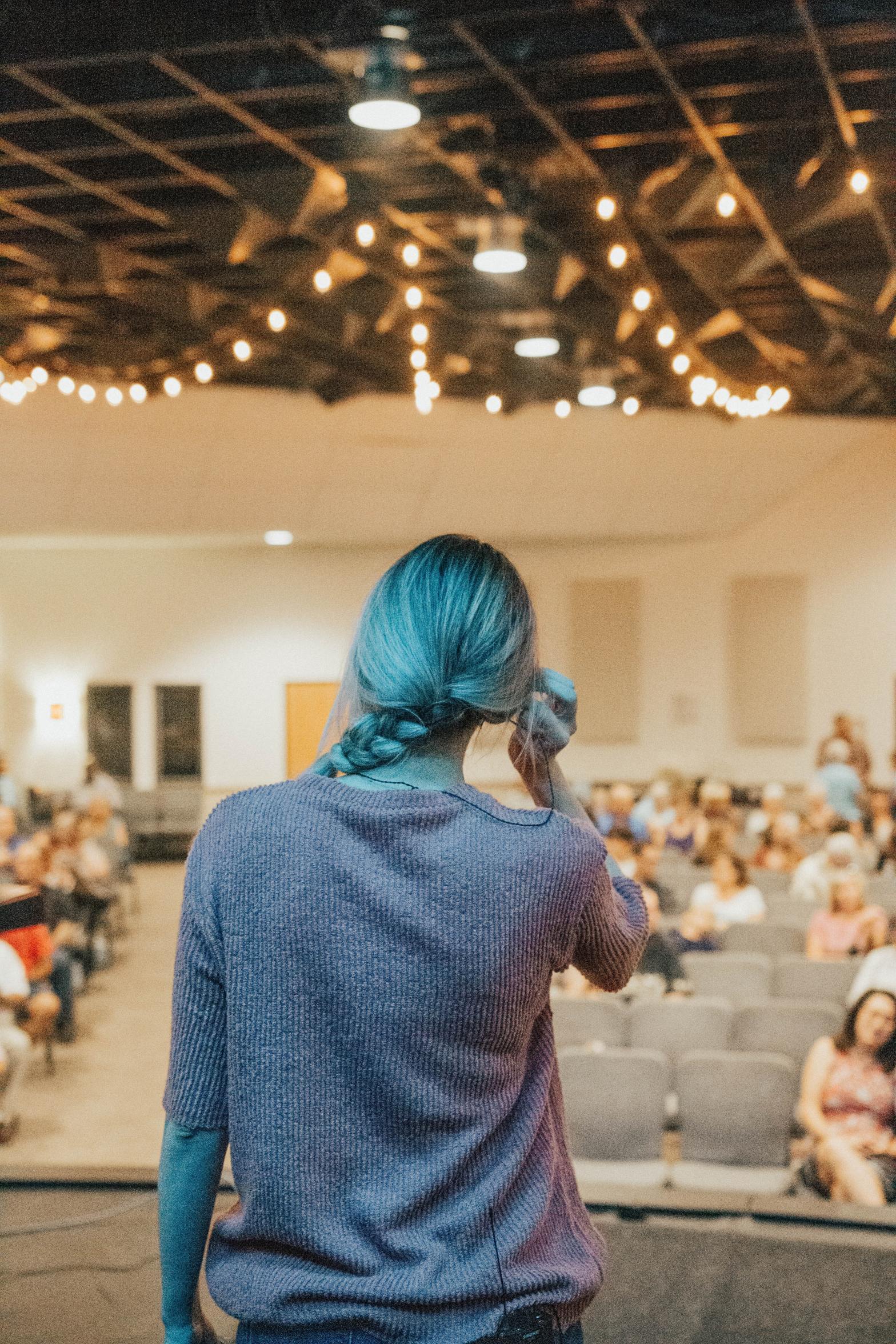
People in recovery speak their own language. It’s one of the most fascinating parts of this discourse community. As a person in recovery, I also speak this language. I can listen to a stranger speak and get clued in to whether this person is in recovery, based on the use of certain terminology or phrases, used within a certain context. People who are involved with 12-step programs often use what are called “thought redirecting” phrases to move us from old thought patterns to new, recovery focused thought patterns. We refer to these as “AA clichés” however each one of them is powerful and works to redirect the addict’s thought process.
Charles Bazerman suggests that “in perceiving an utterance as being of a certain kind or genre, we become caught up in a form of life…we take on the mood, attitude and actional possibilities of that place – they go to that place to do the kinds of things you do there, think the kinds of thoughts you think there, feel the kind of way you feel there, satisfy what you can satisfy there, be the kind of person you can become there….(Bazerman). This is the case when a person involved in a 12-step program hears familiar language or themes being spoken by another…it transports us to a part of our life that is often not shared with others and creates a sense of bonding with the other person. A sense that the person we’re communicating with understands us because we have a shared experience.
One area of consistency within the recovery genre is the prescription for sharing one’s story with others. The first time a person in recovery tells their story publicly, they are reminded by their sponsor and other members of 12-step programs of the parameters around speaking. People in recovery are expected to use the following format when sharing their story:
- What it Was Like
- What Happened
- What it’s Like Now
“What it Was Like” refers to sharing what life looked like while the alcoholic/addict was drinking or using. This usually entails some description of growing up and family dynamics, a description of the use of alcohol or drugs, and a description of the wreckage caused by substance use. People will discuss arrests, DUI’s, relationship issues, hospitalizations, etc. The purpose of this part of the story is to create a sense of connection with the audience; a way to signal to the listener that “I’ve been where you are.” Often, you’ll hear listeners say, “that person told my story.” The sense of identification is important in grounding the listener and creating the feeling that the speaker is “one of us.”
The second component of the Recovery story genre consists of “What Happened.” This part of the story involves sharing what events led to the alcoholic/addict making the decision to enter recovery. It usually involves a specific event in which the recovering person experiences an awakening and really begins to see that their life is out of control and that they need help. Oftentimes, this event involves a tragedy of some sort, like loss of a job, the end of a relationship, an arrest, etc. This part of the share typically includes the specific steps the person took to get help and how they ended up entering recovery or in the rooms of a 12-step program. The purpose of this part of the share is to help the newcomer recognize that all addicts/alcoholics must make a conscious decision to make a change in their life, and then outline what that might look like. This is the beginning of the recovery journey and the addict is beginning to see some hope.
The final part of the share is “What it’s Like Now.” This portion of the share outlines how the individual has grown in recovery and is the opportunity for the addict/alcoholic to really focus on the message of hope. The speaker will talk about the changes in their life, now that they’re not using drugs or alcohol any longer. They may talk about the impact working the 12-steps has had on their life. They may discuss new jobs, completion of school, new relationships, or other things that have improved their life. They will usually talk about the work involved in creating a new life, free of substances. This portion of the talk is designed to instill a sense of hope in the listener and to cement the idea that the gifts of recovery are available to all.
The purpose of this three-part story arc is to create a connection with the listener and to send the message that “I was once like you, but I found a solution that worked. Here is what I did.” This is a very powerful mechanism for sharing a message and is useful in all kinds of situations. It works when meeting with someone one-on-one and I frequently use this messaging when working with addicts. It works when sharing publicly and creates connection with the audience – a way of illustrating that “I’m just like you.”
Deviation from the expected format can result in admonition for one’s sponsor and good-natured ribbing from other “old-timers” in the program. The mistake that newcomers make is they spend too much time on the “What it Was Like” portion of the story. The story may begin to sound like a “drunkalog” where the speaker goes on and on about all the things they did while using. There sponsor may say something like “we all know how to get drunk; you don’t have to spend so much time on that part of your story. People need to hear the solution.” These gentle suggestions are meant to help the recovering person to stay focused on what specific actions they took or are taking to improve their life and refrain from substance use.
The formula used by substance users in recovery to share their story is a perfect example of the creation of genre with the recovery community. The need of individuals in recovery to identify with others and to experience a message of hope is consistent with the 12-step journey. People in recovery must always be cognizant of where they come from and the impact that substance use had on their life. We are called to share the message of recovery with those who are seeking relief from their own substance use issues. The three-part story arc allows us to do this in a structured way.
Resources
Bazerman, C. Genre and Identity: Citizenship in the Age of the Internet and the Age of Global Capitalism. In R. Coe, L. Lingard, & T. Teslenko (Eds.), The Rhetoric and Ideology of Genre: Strategies for Stability and Change: Hampton Press.
 Women and Recovery
Hi Tamera,
I think your blog topic is one that is not talked about enough. You offer great information and resources to help the issue at hand. Your visuals are also powerful and apply well with your text information. The blog itself is easy to navigate and aesthetically pleasing. Great job!
LikeLike
Hi Tamera,
As someone who is not great at sharing my feelings with others, I find those who enter into recovery programs and tell their stories to groups of people to be very brave. To me, verbally sharing seems incredibly intimidating. However, that’s my own issue to work on. Altogether, I have great respect for people who enter into recovery and make the decision to change their lives for the better. It is possible for people to change, yet I know it is not easy. There have been people in my life who have made the decision to get better, and to watch them succeed is amazing. That being said, it can also be hard because I want to help, but I do not want to say the wrong thing and/or crowd them. So, I mainly just try to be supportive without adding any further pressure on them. So far, I think that strategy has worked out okay.
LikeLike
Hi Tamera,
I’ve had students in my composition courses immediately develop a bond when they both shared they were members of the recovery community. It was really cool to see how their faces light up and how they interacted within the class. It was really cool to see how you unpacked this phenomenon throughout your blog.
Great structure throughout your blog that echoed the parameters for sharing a story. Consider bringing in some of Smith’s ideas about narrative as you revise to further support this mode of communication throughout the recovery community. The trajectory of the narrative structure is really empowering for the speaker and audience, so I think that you can explore these ideas a bit more throughout the body of your blog entry.
I do a lot of research with narratives, and I’ve found that the personal narrative is powerful for the writer and the listener. When people share their testimony, what is the exigence? Do all people in the recovery community share a testimony? Can these testimonies be triggering for some audiences? Is there a gendered component to testimoney i.e. do men, women, and non-binary folks share their testimnoney in different ways while using the same structure?
There’s so much to explore with this topic, and I hope that you do further work in this area! I enjoyed reading your blog a lot.
Haley
LikeLike