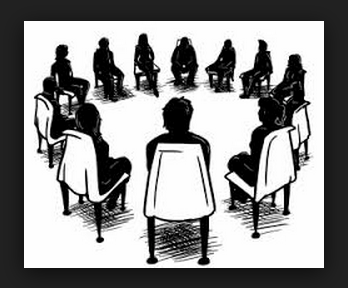
Writing about recovery from substance use is tricky business. The recovery community thrives, partly as the result of its expectation of anonymity. The 12-traditions of Alcoholics Anonymous state that “anonymity is the spiritual foundation of all our traditions, ever reminding us to place principles before personalities.” (Wilson, 2001)This focus on anonymity is in direct conflict with the need for creating a public face of recovery, and one that all individuals writing about recovery must grapple with.
Guidance issued by the A.A World Service Organization specifically addresses the issue of internet usage by members of A.A. (“A.A. Traditions and the Internet,”). Traditions 6, 7, 11, and 12 are applicable to issues that may arise from posting on websites or social media.
Tradition Six states “An A.A. group ought never endorse, finance or lend the A.A name to any related facility or outside enterprise, lest problems of money, property and prestige divert us from our primary purpose.” (Wilson, 2001). This tradition serves to protect the integrity of the A.A. organization and encourages members to remain refrain from endorsing specific programs or ideologies regarding recovery. It is problematic when attempting to link to treatment centers or advertise recovery-oriented groups. Many programs operate within the framework of 12-step principles, but they cannot specifically state that this is the foundation of their program.
Tradition Seven states “Every A.A. group ought to be fully self-supporting, declining outside contributions.” (Wilson, 2001). This tradition keeps A.A. group from actively soliciting donations of any type. A.A. members sometimes form subgroups that may fundraise for specific events, but donation buttons and donation information are not typically found on A.A. affiliated websites. Treatment centers and other recovery-based institutions cannot use the A.A. name to solicit donations.
Tradition Eleven states “Our public relations policy is based on attraction rather than promotion; we need always maintain personal anonymity at the level of press, radio, film and TV.” (Wilson, 2001). This tradition is where the anonymity problem really begins to rear it’s head. A.A. has determined that this tradition also applies to social media. The expectation is that A.A. members will maintain anonymity in their social media activities. There are private Facebook groups for A.A. groups, but these groups cannot present a public face. There are groups for specific events that may be occurring, but again there can be no identifying information or photographs of people involved in the activities.
Tradition Twelve states “anonymity is the spiritual foundation of all our traditions, ever reminding us to place principles before personalities.” (Wilson, 2001). When using digital media, the individual is responsible for their own anonymity and the anonymity of others. I many choose to share with people that I am in long term recovery from substance use, but I cannot ever break someone else’s anonymity. The betrayal of trust in this sort of action is unforgiveable.
How can people involved in 12-step programs utilize social media safely, and more importantly, how can organizations affiliated with 12-step programs use social media to expand their reach and introduce more people to recovery lifestyles? Facebook and other social media sites are public in nature. It is a place where people from all walks of life mingle. It’s important to ask ourselves the following questions when utilizing social media:
- Am I posting about the message or the messenger?
- Are my posts designed to help someone else?
- Am I using my story to affiliate with political causes?
- Am I using caution in identifying people in photographs and statements?
- Am I refraining from controversy?
- Am I providing helpful links to local A.A resources?
Like everything in recovery, we need to be clear about our motives when using social media. I belong to several recovery based private Facebook groups, that are used to keep people informed of local events. Most of the postings in these groups are uplifting memes, recovery related jokes, or announcements regarding events. There are no donation buttons, no evidence of affiliation with other groups, and political posts are promptly squashed and the poster given a talking to by the group administrators.
Another area that has caused some consternation within the recovery community, particularly among those of us who are professionally engaged with recovery, is the advertising of treatment centers and services on social media. There have been accusations of patient brokering and instances of treatment centers engaging in unscrupulous advertising practices. These types of practices prey on desperate people who are looking for help with overwhelming problems. Patient brokering is when a drug rehab or similar facility pays a third party for bringing a patient to their establishment. The patient believes they are being referred by a responsible party who has their best interest at heart, but patient brokers and the addiction treatment centers that use them are primarily focused on their finances. Treatment facilities may have informal agreements between themselves and transfer patients between facilities based on what the patient’s insurance is able to pay for. These are very shady practices and these facilities are not concerned about patient well-being.
In order to crack down on these practices, Facebook, Google and Instagram require all treatment facilities advertising on their platforms to be certified by a company called LegitScript. Legitscript has a rigorous and expensive certification process which is designed to weed out unscrupulous programs. Google will not rank advertising from programs that are not LegitScript certified. Facebook and Instagram will not allow advertising on their platforms from programs that do not meet this criterion. LegitScript will not certify halfway houses, recovery homes, or other programs that do not provide a clinical component.
In recent years, as individuals in recovery become more adept at using social media, there has been a movement toward making recovery “cool” for young people. Instagram is the primary vehicle for doing this. There are now recovery “influencers” who post memes, information and sobriety-positive photos to engage other young people in recovery. There are a plethora of recovery blogs which get significant traffic and provide information on other paths to sobriety which don’t involve 12-step programs. These blogs are providing a valuable space for those who are interested in learning more about recovery, or engaging in non-12-step programs.
It is difficult to gain traction from a global perspective, within the recovery space. Requirements of anonymity and the social stigma associated with suffering from a substance use disorder serve to minimize the information that people are willing to share. There continues to be much work needed in this area.
Works Cited
A.A. Traditions and the Internet. Retrieved from https://www.aa.org/assets/en_US/mg-18_internet.pdf
Wilson, B. (2001). Alcoholics Anonymous (4th ed.). New York: A.A. World Services.
 Women and Recovery
Hi Tamera,
Thank you for your honest and insightful blog post here! You bring up some very interesting issues that I’ve never thought about. I am reminded of one of your comments on my discussion posts about UNESCO; perhaps they are not engaged on social media for the protection of their community, or because they are supposed to be a helping hand.
I have some feedback for your blog;
1. I think that this blog lends itself to headings. For example, at your paragraph beginning with “Another area that has caused some consternation within the recovery community”, there seems to be a natural change in topic that could be identified by a heading or subtitle.
2. In your bulleted list on what is/is not okay to post on social media, I think that I would appreciate some fictional examples. For example, in the first list item “Am I posting about the message or the messenger?”, you could craft a (fictional) example for each instance to better demonstrate the difference to a reader. I found myself feeling like I understood the general concept of the points that you were making, but not the details. Using fictional examples would also help to preserve the anonymity of this discourse community while providing some clarity to readers.
LikeLike
Hi Tamera,
Thanks for sharing your insights into this issue. It’s not one that I had considered before, but I think that the implications of your discussion here are wide-reaching. The complex balance of providing visibility to the issue and maintaining anonymity for those involved does place severe limits on promotions, which is an issue that many organizations do not have to consider. However, there is overlap with other types of non-profits which give support to vulnerable populations. This issue came to mind for me when looking at the media for Doctors Without Borders. While I don’t have explicit reason to think that their intentions are anything less than well-meaning, some of their content can come off as exploitative when it features people who are living in challenging circumstances due to wars, disease, or financial instability. While it is important that their stories are heard, it is important that those stories are shared with a sense of dignity and agency, similarly to what you discuss.
I really appreciate the way that you methodically worked through the traditions which are most important to keep in mind when considering the role of social media. That being said, I think that it would be helpful to include a little more context or narrative commentary in your introduction to ease in your audience. I can only speak for myself, but as a person who does not have much experience with the recovery community, I think I would have found the information easier to contextualize if it was broken up with more discussion.
All in all, you do a fabulous job of shining a light on the particular issues which the recovery community must face when considering the role of social media, while also raising important questions for your audience, no matter their specialization. Thank you for that! 😊
LikeLike
Hi, Tamera
Another great blog here, Tamera. What a great issue to talk about since it is something I wondered when it came to social media. How does one keep anonymity when dealing with substance abuse across social media platforms?
I would imagine anyone who is in recovery would be hesitant about social media when it comes to being anonymous. A person’s issues with substance abuse can be a place of pain and suffering and trying to achieve recovery can be very difficult, especially if confidentiality is breached accidentally. Previously, I never heard of legitscript. It is nice to know there are programs out there to help protect people in recovery avoid unsavory sites that can do more damage than good for people in need.
Overall, I enjoyed reading the blog; it was informative and I thought the video and images were used perfectly. Great job!
Thank you,
Anthony
LikeLike