Social Media in the Recovery Space

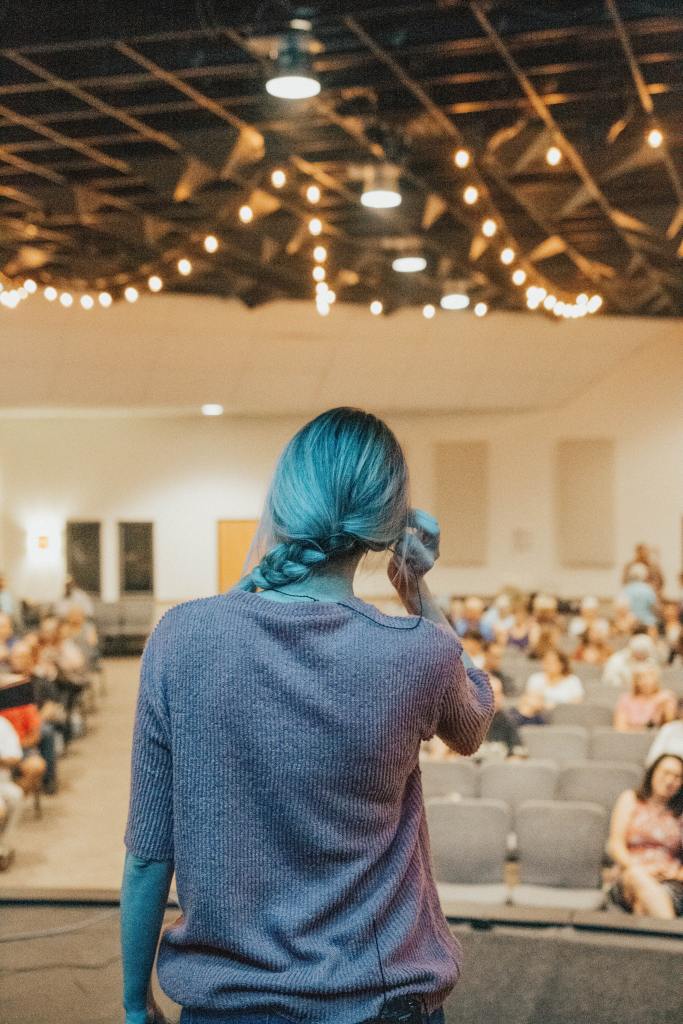
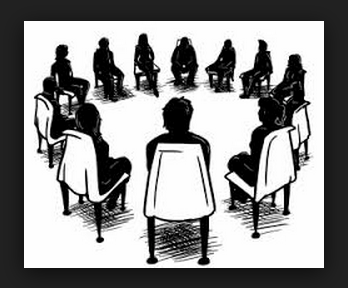
Recovery meeting

Writing about recovery from substance use is tricky business. The recovery community thrives, partly as the result of its expectation of anonymity. The 12-traditions of Alcoholics Anonymous state that “anonymity is the spiritual foundation of all our traditions, ever reminding us to place principles before personalities.” (Wilson, 2001)This focus on anonymity is in direct conflict with the need for creating a public face of recovery, and one that all individuals writing about recovery must grapple with.

Guidance issued by the A.A World Service Organization specifically addresses the issue of internet usage by members of A.A. (“A.A. Traditions and the Internet,”). Traditions 6, 7, 11, and 12 are applicable to issues that may arise from posting on websites or social media.

Tradition Six states “An A.A. group ought never endorse, finance or lend the A.A name to any related facility or outside enterprise, lest problems of money, property and prestige divert us from our primary purpose.” (Wilson, 2001). This tradition serves to protect the integrity of the A.A. organization and encourages members to remain refrain from endorsing specific programs or ideologies regarding recovery. It is problematic when attempting to link to treatment centers or advertise recovery-oriented groups. Many programs operate within the framework of 12-step principles, but they cannot specifically state that this is the foundation of their program.

Tradition Seven states “Every  A.A. group ought to be fully self-supporting, declining outside contributions.” (Wilson, 2001). This tradition keeps A.A. group from actively soliciting donations of any type. A.A. members sometimes form subgroups that may fundraise for specific events, but donation buttons and donation information are not typically found on A.A. affiliated websites. Treatment centers and other recovery-based institutions cannot use the A.A. name to solicit donations.

Tradition Eleven states “Our public relations policy is based on attraction rather than promotion; we need always maintain personal anonymity at the level of press, radio, film and TV.” (Wilson, 2001). This tradition is where the anonymity problem really begins to rear it’s head. A.A. has determined that this tradition also applies to social media. The expectation is that A.A. members will maintain anonymity in their social media activities. There are private Facebook groups for A.A. groups, but these groups cannot present a public face. There are groups for specific events that may be occurring, but again there can be no identifying information or photographs of people involved in the activities.

Tradition Twelve states “anonymity is the spiritual foundation of all our traditions, ever reminding us to place principles before personalities.” (Wilson, 2001). When using digital media, the individual is responsible for their own anonymity and the anonymity of others. I many choose to share with people that I am in long term recovery from substance use, but I cannot ever break someone else’s anonymity. The betrayal of trust in this sort of action is unforgiveable.

How can people involved in 12-step programs utilize social media safely, and more importantly, how can organizations affiliated with 12-step programs use social media to expand their reach and introduce more people to recovery lifestyles? Facebook and other social media sites are public in nature. It is a place where people from all walks of life mingle. It’s important to ask ourselves the following questions when utilizing social media:

  • Am I posting about the message or the messenger?
  • Are my posts designed to help someone else?
  • Am I using my story to affiliate with political causes?
  • Am I using caution in identifying people in photographs and statements?
  • Am I refraining from controversy?
  • Am I providing helpful links to local A.A resources?
The Anonymous People Trailer

Like everything in recovery, we need to be clear about our motives when using social media. I belong to several recovery based private Facebook groups, that are used to keep people informed of local events. Most of the postings in these groups are uplifting memes, recovery related jokes, or announcements regarding events. There are no donation buttons, no evidence of affiliation with other groups, and political posts are promptly squashed and the poster given a talking to by the group administrators.

Another area that has caused some consternation within the recovery community, particularly among those of us who are professionally engaged with recovery, is the advertising of treatment centers and services on social media. There have been accusations of patient brokering and instances of treatment centers engaging in unscrupulous advertising practices. These types of practices prey on desperate people who are looking for help with overwhelming problems. Patient brokering is when a drug rehab or similar facility pays a third party for bringing a patient to their establishment. The patient believes they are being referred by a responsible party who has their best interest at heart, but patient brokers and the addiction treatment centers that use them are primarily focused on their finances. Treatment facilities may have informal agreements between themselves and transfer patients between facilities based on what the patient’s insurance is able to pay for. These are very shady practices and these facilities are not concerned about patient well-being.

In order to crack down on these practices, Facebook, Google and Instagram require all treatment facilities advertising on their platforms to be certified by a company called LegitScript. Legitscript has a rigorous and expensive certification process which is designed to weed out unscrupulous programs. Google will not rank advertising from programs that are not LegitScript certified. Facebook and Instagram will not allow advertising on their platforms from programs that do not meet this criterion. LegitScript will not certify halfway houses, recovery homes, or other programs that do not provide a clinical component.

In recent years, as individuals in recovery become more adept at using social media, there has been a movement toward making recovery “cool” for young people. Instagram is the primary vehicle for doing this. There are now recovery “influencers” who post memes, information and sobriety-positive photos to engage other young people in recovery. There are a plethora of recovery blogs which get significant traffic and provide information on other paths to sobriety which don’t involve 12-step programs. These blogs are providing a valuable space for those who are interested in learning more about recovery, or engaging in non-12-step programs.

It is difficult to gain traction from a global perspective, within the recovery space. Requirements of anonymity and the social stigma associated with suffering from a substance use disorder serve to minimize the information that people are willing to share. There continues to be much work needed in this area.

Works Cited

A.A. Traditions and the Internet. Retrieved from https://www.aa.org/assets/en_US/mg-18_internet.pdf

Wilson, B. (2001). Alcoholics Anonymous (4th ed.). New York: A.A. World Services.
Sharing the Story of Recovery

Photo by William Moreland on Unsplash

People in recovery speak their own language. It’s one of the most fascinating parts of this discourse community. As a person in recovery, I also speak this language. I can listen to a stranger speak and get clued in to whether this person is in recovery, based on the use of certain terminology or phrases, used within a certain context. People who are involved with 12-step programs often use what are called “thought redirecting” phrases to move us from old thought patterns to new, recovery focused thought patterns. We refer to these as “AA clichés” however each one of them is powerful and works to redirect the addict’s thought process.

Charles Bazerman suggests that “in perceiving an utterance as being of a certain kind or genre, we become caught up in a form of life…we take on the mood, attitude and actional possibilities of that place – they go to that place to do the kinds of things you do there, think the kinds of thoughts you think there, feel the kind of way you feel there, satisfy what you can satisfy there, be the kind of person you can become there….(Bazerman). This is the case when a person involved in a 12-step program hears familiar language or themes being spoken by another…it transports us to a part of our life that is often not shared with others and creates a sense of bonding with the other person. A sense that the person we’re communicating with understands us because we have a shared experience.

One area of consistency within the recovery genre is the prescription for sharing one’s story with others. The first time a person in recovery tells their story publicly, they are reminded by their sponsor and other members of 12-step programs of the parameters around speaking. People in recovery are expected to use the following format when sharing their story:

  • What it Was Like
  • What Happened
  • What it’s Like Now

“What it Was Like” refers to sharing what life looked like while the alcoholic/addict was drinking or using. This usually entails some description of growing up and family dynamics, a description of the use of alcohol or drugs, and a description of the wreckage caused by substance use. People will discuss arrests, DUI’s, relationship issues, hospitalizations, etc. The purpose of this part of the story is to create a sense of connection with the audience; a way to signal to the listener that “I’ve been where you are.” Often, you’ll hear listeners say, “that person told my story.” The sense of identification is important in grounding the listener and creating the feeling that the speaker is “one of us.”

The second component of the Recovery story genre consists of “What Happened.” This part of the story involves sharing what events led to the alcoholic/addict making the decision to enter recovery. It usually involves a specific event in which the recovering person experiences an awakening and really begins to see that their life is out of control and that they need help. Oftentimes, this event involves a tragedy of some sort, like loss of a job, the end of a relationship, an arrest, etc. This part of the share typically includes the specific steps the person took to get help and how they ended up entering recovery or in the rooms of a 12-step program. The purpose of this part of the share is to help the newcomer recognize that all addicts/alcoholics must make a conscious decision to make a change in their life, and then outline what that might look like. This is the beginning of the recovery journey and the addict is beginning to see some hope.

The final part of the share is “What it’s Like Now.” This portion of the share outlines how the individual has grown in recovery and is the opportunity for the addict/alcoholic to really focus on the message of hope. The speaker will talk about the changes in their life, now that they’re not using drugs or alcohol any longer. They may talk about the impact working the 12-steps has had on their life. They may discuss new jobs, completion of school, new relationships, or other things that have improved their life. They will usually talk about the work involved in creating a new life, free of substances. This portion of the talk is designed to instill a sense of hope in the listener and to cement the idea that the gifts of recovery are available to all.

The purpose of this three-part story arc is to create a connection with the listener and to send the message that “I was once like you, but I found a solution that worked. Here is what I did.” This is a very powerful mechanism for sharing a message and is useful in all kinds of situations. It works when meeting with someone one-on-one and I frequently use this messaging when working with addicts. It works when sharing publicly and creates connection with the audience – a way of illustrating that “I’m just like you.”

Deviation from the expected format can result in admonition for one’s sponsor and good-natured ribbing from other “old-timers” in the program. The mistake that newcomers make is they spend too much time on the “What it Was Like” portion of the story. The story may begin to sound like a “drunkalog” where the speaker goes on and on about all the things they did while using. There sponsor may say something like “we all know how to get drunk; you don’t have to spend so much time on that part of your story. People need to hear the solution.” These gentle suggestions are meant to help the recovering person to stay focused on what specific actions they took or are taking to improve their life and refrain from substance use.

The formula used by substance users in recovery to share their story is a perfect example of the creation of genre with the recovery community. The need of individuals in recovery to identify with others and to experience a message of hope is consistent with the 12-step journey. People in recovery must always be cognizant of where they come from and the impact that substance use had on their life. We are called to share the message of recovery with those who are seeking relief from their own substance use issues. The three-part story arc allows us to do this in a structured way.

Resources

Bazerman, C. Genre and Identity: Citizenship in the Age of the Internet and the Age of Global Capitalism. In R. Coe, L. Lingard, & T. Teslenko (Eds.), The Rhetoric and Ideology of Genre: Strategies for Stability and Change: Hampton Press.

Women’s Treatment Needs

Photo by Dan Meyers on Unsplash

Women with substance use disorders have needs that differ from the needs of men. Although both populations struggle with substance use disorders, women have additional concerns related to the impact that substance use has on their physical health, as well as their roles as primary caretakers of children and in family systems. These additional challenges impact the ability of women to participate in treatment and to access resources. Challenges specific to treating women with substance use disorders include (Center for Substance Abuse Treatment, 2009):

  • Acknowledgement of the socioeconomic issues and differences among women
  • Recognizing the significance of relationships in women’s lives
  • Addressing women’s health concerns
  • Attending to the various caregiver roles that women take on in their lives
  • Recognition of societal attitudes regarding women who abuse substances
  • Commitment to trauma-informed care
  • Commitment to a strengths-based approach to treatment

Writers must be cognizant of the above issues in order to effectively serve this discourse community. Stephanie Covington (Covington, 2008) has developed a robust treatment program specifically designed to address the needs of women. She understands that treatment must be holistic and address the whole person, and not just focus on cessation of substance use. James Gee refers to this as “recognition work” (Gee, 1999). Women need to see their stories reflected in the treatment materials developed to address their issues.

Photo by Bimo Luki on Unsplash

Women face different socioeconomic challenges than men. This impacts their ability to access treatment and stay in treatment. Aside from pay disparities (women earn approximately 75% of what men earn in the same jobs), there are also challenges around what type of work women engage in. Many treatment programs require participants to attend groups in the evening. Women with substance use disorders tend to work in service industries and as caretakers. Evenings are when their children are home from school, or they may be providing care for others in the home. Women with substance use disorders often have not completed high school or lack the skills necessary for higher paying jobs. Financial limitations, lack of access to transportation, and lack of appropriate medical care are all barriers that women in recovery must overcome.  

I worked as the clinical liaison for a Recovery Court program in Coconino County, Arizona. One of the primary challenges my female clients faced was finding employment that worked with Recovery Court requirements. Men would typically get construction jobs, which meant they worked during the day and typically had weekends off. Women, particularly those who were addicted to methamphetamine, struggled finding work. Many women had extensive damage to their teeth. They had difficulty finding work, because so much of the work that women do involves interacting with the public. They ended up cleaning hotel rooms and working in kitchens, where the hours may not be conducive to meeting Recovery Court requirements. This is an example of the additional challenges that women face when attempting to participate in treatment.

Photo by 🇸🇮 Janko Ferlič on Unsplash

Recovery focused resources that are addressing women’s needs must recognize the importance of relationships in women’s lives. Women are socialized, from childhood, to view themselves in relation to others. They are daughters, wives, and mothers. Culturally, there are prescribed roles that women are socialized to “fit into.” Women who choose to ignore these roles are often ostracized or shamed for failing to conform to societal expectations. There is tremendous pressure on women to conform. Women seeking to recover from substance use disorders must balance this pressure to conform to expected gender norms with the expectation that they make their recovery a priority in life. Treatment programs, 12-step meetings, and outpatient treatment venues often have groups in the evening. This is the time that many women are obligated to spend caring for children, significant others or parents. Women who make themselves a priority and are actively working on recovering from substance use disorders are often pressured by loved ones to skip meetings, ignore court mandates, or call in to scheduled activities. Treatment providers tend to be rigid in their expectations and often have mandatory attendance policies that prohibit women from attending. Additionally, women who are seeking residential treatment, often must find someone to care for their children for months at a time in order to get the help they need. There are very few programs that allow women to keep their children with them while they participate in treatment.

Many women with substance use disorders have been the victims of physical and sexual violence, oftentimes childhood sexual abuse. They are often involved in abusive relationships with partners who are also addicts. This complicates the recovery journey on a few levels. A partner or spouse who is not supportive and becomes abusive and controlling when a woman attempts to get help will destroy any motivation a woman may have for change. Living in fear that she will be abused or living with the symptoms of PTSD make it difficult for women to engage effectively in treatment. Most treatment programs that are designed for women have a strong trauma informed care component.

Writers who are reaching out to the community of women in recovery must be sensitive to these issues. Material that is helpful to women in recovery contains resources to help them overcome these barriers. Lists of local resources for childcare are important. Treatment programs or activities that occur at a variety of times throughout the day are necessary. Resources to address trauma issues are essential. Strategies for juggling caretaking responsibilities and for addressing relationship issues are required to support women. Information on domestic violence shelters, free or reduced cost counseling services, and information about access to medical care are important resources for women.

An understanding of gender specific treatment is essential when working with women in recovery. The demands on women’s emotional energy, time, and resources are significant and effective treatment strategies recognize the unique needs of this community.

References

Center for Substance Abuse Treatment, S. A. a. M. H. S. (2009) Substance Abuse Treatment: Addressing the Specific Needs of Women. In, Treatment Improvement Protocol (TIP). Rockville, MD: Department of Health and Human Services.

Covington, S. S. (2008). Women and Addiction: A Trauma-Informed Approach. Journal of Psychoactive Drugs, 377-385.

Gee, J. P. (1999). An introduction to discourse analysis : theory and method. London ; New York: Routledge.

Why Gender Specific Resources are Important for Women in Recovery

Photo by Elevate on Unsplash

Women who suffer from substance use disorders often remain in the shadows. Most think of alcoholism and drug addiction as primarily impacting males. Addiction studies are primarily done with male participants. We rarely see studies involving women or studies that are specific to gender. Often, women’s substance use issues go undetected or are attributed to other mental health conditions, such as depression or anxiety. This website aims to provide information specific to the needs of women who are struggling with substance use disorders. We want to be a place of safety, where women can ask questions, find resources, and make informed decisions about how they want to address their issues with substances.

Why is gender-specific treatment important? Many women report that they began using substances following an experience of a traumatic event. They became overwhelmed, didn’t feel that they could tell anyone what happened, felt that they didn’t have adequate support, and began using substances to numb their feelings. I spoke with Graciela del Moral, owner of a successful treatment center, about the needs of women in recovery and the importance of providing gender-specific resources, particularly on the internet.

For many women, the first realization that they might have a problem with drugs or alcohol occurs within the context of their relationships. Their partner or family may begin to complain about their substance use. They may find themselves becoming short-tempered with their children or becoming resentful of the time that childcare takes away from their ability to “socialize” or engage in activities that include substance use. They may complain of being stressed out and look for excuses to use alcohol during the day or in the evening after the children are asleep. Because there is so much stigma associated with substance use, women may turn to the internet to begin to find answers to questions they have about their substance use. Questions like, what is considered heavy drinking? Am I an alcoholic? Is my marijuana use out of hand? How much is too much? Del Moral reports that consumers of information regarding women in recovery include women looking for support in their recovery journeys, women who are socially isolated and don’t have ready access to treatment resources, women who are wondering whether they have a problem with drugs and alcohol, women who are frustrated with 12-step programs or aren’t getting their needs met in that environment, women who are looking for local resources, and professionals who are looking for resources for their clients or patients.

Stigma

Stigma regarding substance use plays a substantial role in keeping women from seeking help. A 2017 study published in Current Opinion in Psychiatry indicated that people with substance use disorders experienced stigma in five areas. They were considered more dangerous and unpredictable; to have reduced decision-making ability; to be responsible for their conditions (they are choosing to be addicts or alcoholics); that they should be able to stop without treatment; and that they are immoral or criminal (Baker et al.; Yang et al.). These myths about substance use impact women’s ability to reach out for help or sometimes, to even begin to investigate whether they have a problem. The shame and guilt associated with substance use become their dirty little secret. The risks of seeking help can include concern that family, spouses and employers may find out. There is always the risk of Child Protective Services involvement if the woman is a mother. She may be fearful of legal consequences. Fear is a powerful motivator when a woman risks losing her significant relationships if she acknowledges that she needs help.

Twelve-step programs are sometimes problematic for women. Meetings are usually dominated by men, and women can be uncomfortable sharing details of their lives in that environment. Many women have trauma histories and feel unsafe in male-dominated spaces. Professional women struggle with the idea that they “have to lose it all” to experience recovery. They have to “hit bottom” in order to experience rebirth and be saved (Smith). These archetypes are particularly distressing for women who have overcome numerous professional hurdles to launch successful careers. They want to learn how to manage their substance use, not be told that they are powerless over everything in their lives.

Communication

Treatment providers, writers, bloggers, and others interested in providing resources to those in recovery need to be sensitive to the needs of women utilizing their resources. It’s important to connect with the reader. Individuals using the website will likely be seeking information regarding recovery (Hasler and Ruthven). They will be looking for self-help ideas, information about substance use in general, and uplifting, triumphant stories. They are looking for reassurance that recovery is possible for them. Blog posts, information on treatment modalities, forums, and local treatment information should all be readily available. Instagram and Facebook are popular vehicles for disseminating general information and information about upcoming events. Instagram feeds of individuals active in recovery can provide positive reinforcement for those in early sobriety. Recovery memes are popular and often used to create a sense of shared experience or camaraderie among those in recovery. Twitter and LinkedIn are good avenues for disseminating professional research and treatment information.

Writers in the recovery sphere need to be engaging and sensitive. Their writing style should include stories of hope and resilience, and draw the reader in. Readers should be able to relate to the struggles of the writer and leave the story with an understanding that recovery is possible. Women who experience substance use disorders come from all backgrounds and education levels. Writers need to be sensitive to this and use plain language whenever possible. Connect with women using clear and simple narratives. Nothing fancy or overwhelming. Writers should share personal experiences or stories whenever possible (Gallanis). Information should be evidence-based and accurate. Local resources should be provided whenever possible. Forums are often helpful because they allow women to communicate with each other, while still maintaining confidentiality.

Development of a website specific to women in recovery is a substantial undertaking, but a worthwhile task. If even one woman finds the information she needs to save her own life, it will be well worth the work involved.

Works Cited

Baker, Laurence, et al. “Use of the Internet and E-Mail for Health Care Information results from a National Survey.” JAMA 289.18 (2003): 2400-06. Print.

Gallanis, Bess. “Sheryl Sandberg’s Four Communication Lessons for Women.”  2013. Web.

Hasler, Laura, and Ian Ruthven. Escaping Information Poverty through Internet Newsgroups. 20112011. Print.

Smith, Craig R. “Rhetorical Dimensions of Myth and Narrative.” Rhetoric and Human Consciousness: A History 4th Ed. Ed. Smith, Craig R.: Waveland Press, 2013. 17-34. Print.

Yang, H. Lawrence, et al. “Stigma and Substance Use Disorders: An International Phenomenon.” Current Opinion in Psychiatry 30.5 (2017): 378-88. Print.

Design a site like this with WordPress.com
Get started